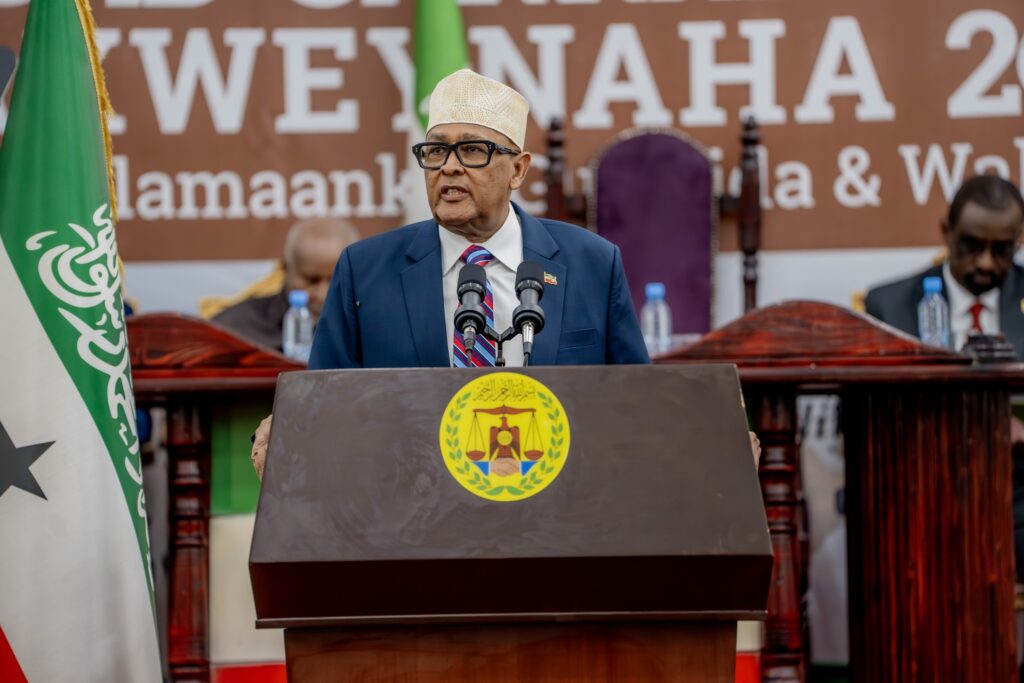
On April 15, 2026, Somaliland President Abdirahman Abdillahi Irro delivered his annual speech to parliament. In his speech, he addressed various issues that essentially concern the current situation in the country. The annual speech of the president is described in the constitution.
- Setting the tone: The President opened by describing Somaliland as continuing to demonstrate stability, democratic governance, and responsible leadership, while stressing that the government is meeting challenges without losing its direction and goals.
- Security as the main focus: Much of the address centered on strengthening peace and safeguarding the state, outlining practical reforms such as bringing newly trained personnel into service, putting in place plans for a military pension system, creating a cyber security structure, and working toward a broader national security strategy.
- Managing internal tensions: He acknowledged regional and internal pressures across Somaliland and said the government’s response is to pursue reconciliation and dialogue—presenting this approach as a way to restore stability rather than escalate conflict.
- Improving governance and fighting corruption: The speech highlighted governance reforms, particularly anti-corruption actions and efforts to strengthen administrative capacity, arguing that these are necessary to maintain public confidence and improve delivery of services.
- Elections and democratic responsibility: The President cautioned that election delays could weaken Somaliland’s democratic standing. He said election timing would be handled through the National Electoral Commission, emphasizing a process that remains official and lawful.
- Economic resilience despite disruptions: On the economy, he recognized that disruptions affecting trade routes have had an impact, but he argued Somaliland remains resilient—citing areas such as performance at Berbera port, livestock export levels, and government fiscal steps like budget increases and moves toward tighter financial controls, including a Treasury Single Account approach.
- Investing in infrastructure and human development: He connected economic and governance efforts to tangible progress in public services, referencing continued investment in roads, water, electricity, expanded connectivity (including fiber-optic rollout), and improvements in the health sector—such as steps toward a national health information system and training for health professionals.
- Foreign policy centered on recognition: Throughout the closing sections, he returned to international recognition as Somaliland’s top priority, explaining that recognition is important not only for legitimacy but also for long-term economic growth and diplomatic stability.